
THE SPLIT-SEASON “PROBLEM” THAT WASN’T
How the most criticized teams at 18U Nationals ended up proving everyone wrong

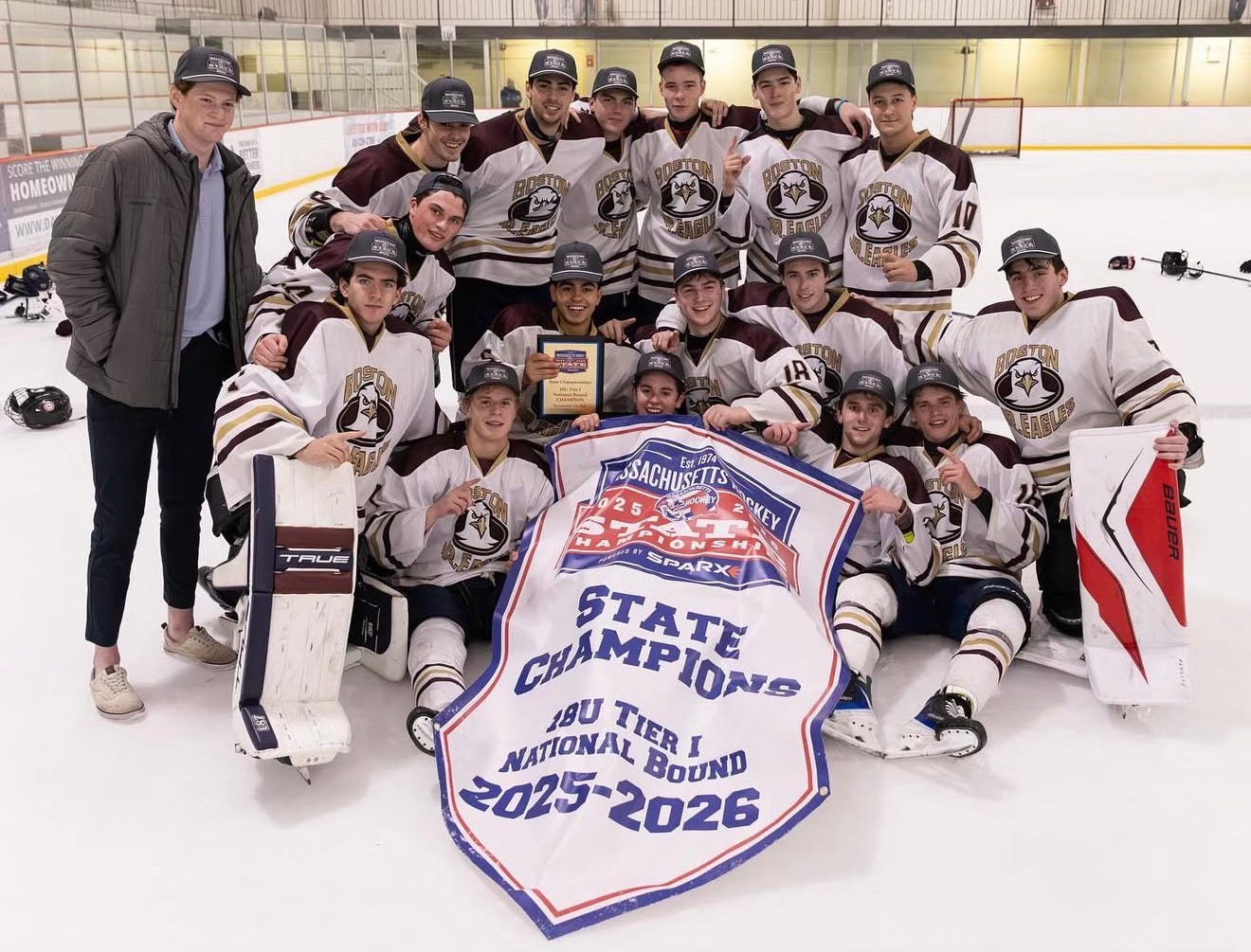
Boston Jr Eagles 18U Team | Photo: Boston Jr Eagles Instagram
Every year, there’s a debate. This year, it wasn’t quiet.
When the at-large selections were announced for the 2026 USA Hockey 18U Tier 1 National Championships, the reaction from certain corners of the hockey world was immediate—and loud.
Too many teams from one region. Not enough “full-season grinders.” A system that “rewards part-time teams.”
And the target was clear: the New England split-season programs.
WHAT PEOPLE THINK THEY KNOW
Let’s clear this up first. These aren’t “part-time teams.”
They are split-season teams—rosters that compete from August through November at an elite level, then disperse to play New England prep school hockey, one of the most competitive pipelines in the country.
When the prep season ends? They regroup. Reload. And go to war at Nationals.
They don’t play 60+ games together like some full-season programs. They play fewer—typically 20–25.
And that’s where the criticism starts.
“They don’t grind.” “They don’t earn it the same way.” “They’re more fresh.”
Sounds good—until you actually look at the data.
THE SELECTIONS WERE NOT A GUESS
The at-large selections this year were:
Neponset Valley River Rats
Northern CT Nor’Easter
Yale Junior Bulldogs
All three were ranked Top 8 nationally heading into selection weekend. This wasn’t politics. This wasn’t favoritism. This was the committee looking at the best teams in the country—and selecting them.
Meanwhile, Mid-Fairfield, the New England district winner, sat comfortably inside the Top 20 nationally.
So let’s be clear: The argument was never about whether these teams were good. It was about whether people liked how they got there.
THEN THE GAMES STARTED
And that’s when the noise stopped. Let’s run through what actually happened:
Northern CT Nor’Easter
→ Beat Shattuck St. Mary’s
→ Finished 4–1 in the tournament
→ Pushed almost all the way through a loaded fieldNeponset River Rats
→ Beat #1 Culver Academies
→ Dominated Mid-Fairfield
→ Advanced into the bracketYale Junior Bulldogs
→ Won multiple high-end matchups
→ Beat Neponset head-to-head
→ Played meaningful games into the weekendBoston Jr. Eagles (Mass District Winner, same ecosystem)
→ Beat Culver
→ Beat Yale
→ Beat Nor’Easter
→ Made the National Championship Game
THE RESULT?
4 split-season teams reached the Quarterfinals
3 reached the Semifinals
1 played for a National Championship
Let that sink in. The exact group that was criticized for being “over-selected”…
…ended up being the backbone of the tournament.
ABOUT THAT “GRIND” ARGUMENT
This is where it falls apart. The idea that these teams didn’t “grind” assumes:
Fewer games = less competitive
Less wear = unfair advantage
More games = better team
That’s not how hockey works. These players didn’t disappear for four months—they went to prep programs that produce:
NCAA commits
USHL talent
NHL draft picks
They didn’t stop developing. They elevated. Then they came back into structured, elite rosters that were already Top 5 in the country. That’s not a shortcut. That’s a different path to the same level—and clearly, it works.
THE GEOGRAPHY COMPLAINT
“Yes, but they’re all from the same area.”
Correct.
And?
If four of the best teams in the country are from the same region, what exactly is the committee supposed to do?
Ignore them?
Hand out participation trophies to weaker teams just to balance a map?
This isn’t rec league. It’s USA Hockey Nationals. The job is not to create geographic diversity—it’s to identify the best teams.
And this year, the best teams happened to come from the same ecosystem.
THE PART PEOPLE WON’T SAY OUT LOUD
Some programs don’t like losing to teams they don’t respect and for years, there’s been a quiet attitude toward split-season teams:
“They’re not real teams.” “They’re not together long enough.” “They wouldn’t survive a full season.”
Well… they didn’t need to. They just needed one week in March and that was enough.
FINAL WORD
The committee got it right. Not just defensible—right.
The numbers supported it. The rankings supported it and most importantly—the results proved it. So the next time this debate comes up—and it will—
remember what just happened.
Because in 2026, the “controversial” picks didn’t just belong…they ran the tournament.